Automated Change Impact Analysis Engine
The human brain is a precision analysis engine. What if we made it reusable?

Background
The Problem
When an engineering change happens in vehicle R&D, you need to trace its ripple effect on test tasks and sample car configurations — spanning MVPS validation rules, BOM structures, and vehicle configurations. These pieces of knowledge are scattered across different people's heads and scattered documents. Previously this was done manually with Excel, taking days. One mistake in information transfer can lead to wasted sample cars, project delays, and even millions in losses.
The Insight
Every time a change occurs, someone is mentally acting as an "impact analysis engine" — figuring out which tests are affected, which sample cars need adjustment, and what the validation implications are. This is cognitively expensive, error-prone, and impossible to scale. What if we could build a shared engine:connecting engineering change data, BOM structures, sample car configurations, and validation experience into an automated pipeline, replacing manual tracing — the most time-consuming and error-prone part of the process? This would dramatically reduce the barrier and time cost of change planning.
What I Did
Building this engine required a three-phase approach: first, consolidating scattered data assets (sample cars, BOM, test plans); second, encoding expert knowledge into computable rules; and third, constructing an automated pipeline from engineering change to test task adjustment.
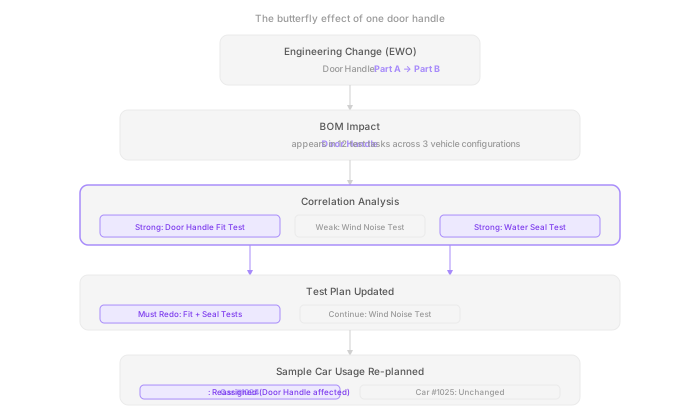
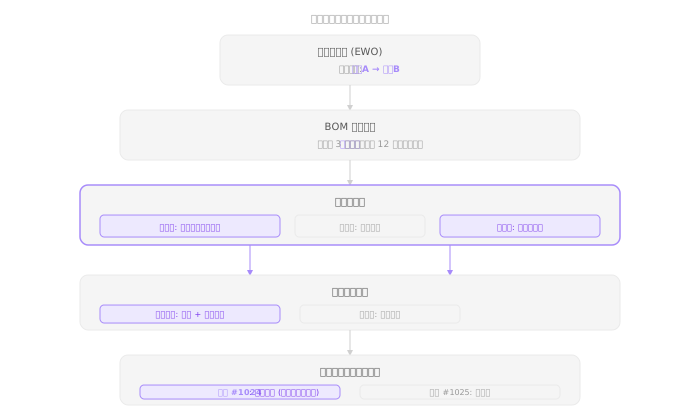
The butterfly effect of a single door handle: An engineering change order requests replacing door handle Part A with Part B. The engine picks up the order, checks the BOM and finds this handle is linked to 12 test tasks. Applying MVPS rules, it determines 2 are strongly correlated — fit test and water seal test must be re-done, while wind noise test has minor impact and can continue. With the test plan updated, prototype car #1024 (equipped with the old handle) needs reassignment, while #1025 is unaffected. The entire process — from a single change order to all plans synchronized — completes in seconds.
Data Infrastructure
Established the data foundation for the impact analysis engine, including sample car configurations, BOM structures, and test plans across all vehicle programs. Successfully onboarded all vehicle programs' test task records (10,000+) and integrated BOM data to enable part-to-test correlation mapping.
Change Impact Analysis Algorithm
Designed and implemented the automated change impact analysis engine — a system that traces the full downstream effect of a single engineering change.
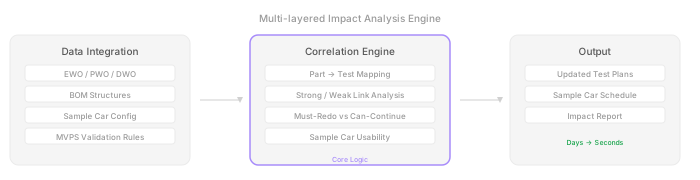
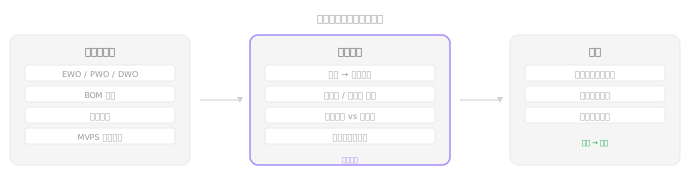
Data Integration Layer — Unified ingestion of EWO/PWO/DWO change orders, BOM hierarchical structures, sample car configurations, and MVPS validation experience library into a single analysis context.
Correlation Engine — Part-to-test association analysis based on MVPS rules, computing correlation strength between changed parts and affected test tasks. Determines which tests must be redone, which can continue, and evaluates sample car usability.
Output Generator — Produces actionable deliverables: updated test plans, sample car reassignment recommendations, and impact traceability reports.
Innovation
Built a human-in-the-loop learning mechanism. Every time the engine produces an impact analysis, practitioners rate its suggestions. This feedback continuously refines the MVPS correlation rules, turning operational experience into structured system knowledge — the engine gets smarter with every change it processes.
Impact
This platform now serves the entire vehicle test department (500+ users) across all vehicle programs. Every DVP, sample car, and test plan dataset has been migrated to the platform.
| Metric | Before | After | Improvement |
|---|---|---|---|
| Change impact assessment speed | Days (manual cross-check) | Seconds (automated) | 1000x+ |
| Test task onboarding | Manual Excel management | 10,000+ tasks live on platform | Full digitization |
| Impact accuracy | ~70% (manual errors) | 95%+ (automated) | +25pp |
| User coverage | Fragmented Excel workflows | 500+ unified platform users | All programs |